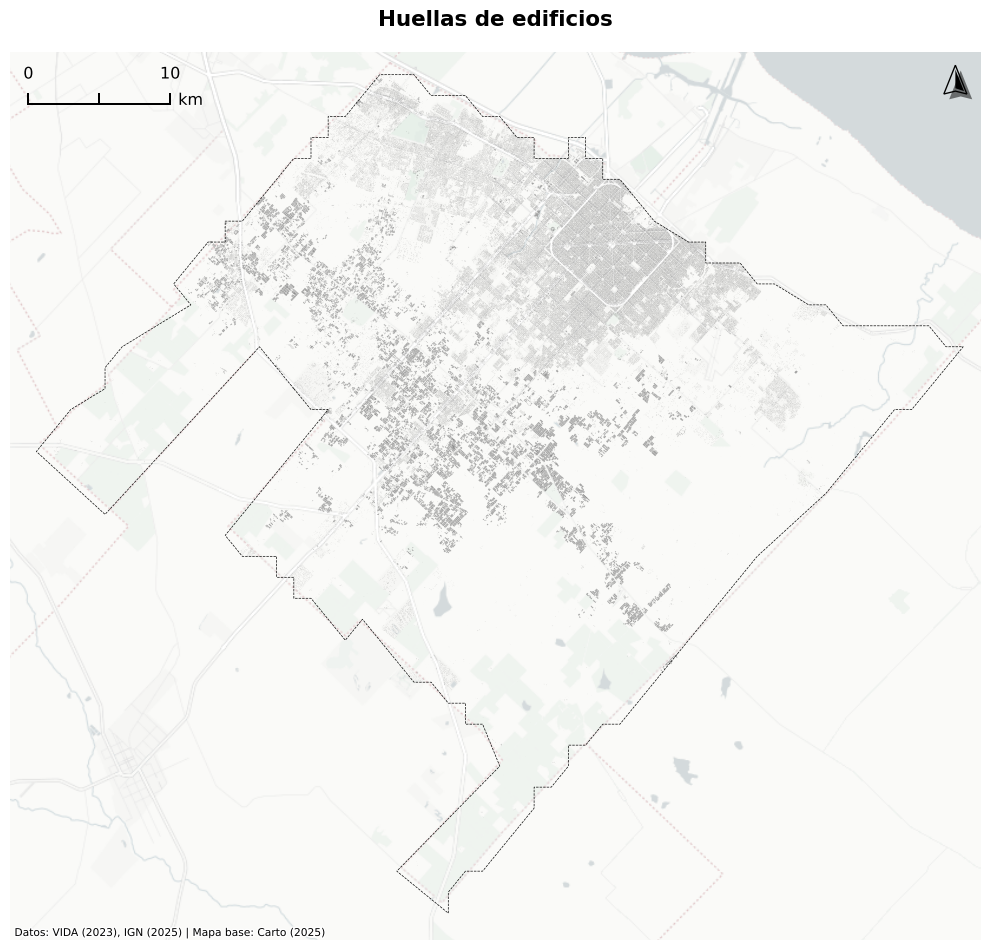
import matplotlib.pyplot as pltfrom shapely.geometry import boximport geopandas as gpdimport osfrom matplotlib_map_utils import north_arrow, scale_barimport contextily as cximport pandas as pdimport contextily as ctximport boto3import duckdbimport s2spherefrom botocore.config import Configfrom io import BytesIOfrom owslib.wfs import WebFeatureServiceUSE_CRS ="EPSG:5349"# POSGAR 2007 / Argentina 4WEB_MERCATOR_CRS ="EPSG:3857"# visualizaciónWGS84_CRS ="EPSG:4326"# para llamadas APIBASE_RUTA ="/home/nissim/Documents/dev/fulbright/ciut-riesgo"DATA_RUTA =f"{BASE_RUTA}/notebooks/data"PARTIDOS_RUTA =f"{DATA_RUTA}/pba_partidos.geojson"EDIFICACIONES_RUTA =f"{BASE_RUTA}/notebooks/edificaciones_filtered.parquet"PARTIDOS_WFS_URL ="https://geo.arba.gov.ar/geoserver/idera/wfs"
Mostrar código
if os.path.exists(PARTIDOS_RUTA):print("Cargando datos de partidos existentes...") partidos = gpd.read_file(PARTIDOS_RUTA)else:print("Descargando datos de partidos desde servicio WFS...")# Conectar al servicio WFS wfs = WebFeatureService(url=PARTIDOS_WFS_URL, version="2.0.0")# Descargar la capa de departamentos response = wfs.getfeature(typename="idera:Departamento", srsname="EPSG:5347")# Convertir a GeoDataFrame partidos = gpd.read_file(BytesIO(response.read()))# Guardar para uso futuro partidos.to_file(PARTIDOS_RUTA, driver="GeoJSON")print(f"Descargados {len(partidos)} partidos")partidos = partidos.to_crs(USE_CRS)aoi = partidos[partidos["fna"] =="Partido de La Plata"]# Obtener la geometría principalmain_geom = aoi.geometry.iloc[0]# Si es un MultiPolygon, mantener solo el polígono más grande (el partido principal)# Esto elimina la pequeña isla que aparece en los datosif main_geom.geom_type =="MultiPolygon":# Obtener todos los polígonos y mantener el que tenga mayor área largest_polygon =max(main_geom.geoms, key=lambda p: p.area) aoi = aoi.copy() # Crear una copia para evitar SettingWithCopyWarning aoi.loc[aoi.index[0], "geometry"] = largest_polygonaoi_bbox = aoi.geometry.iloc[0]if os.path.exists(EDIFICACIONES_RUTA):print("Cargando datos de edificaciones existentes...") edificaciones = gpd.read_parquet(EDIFICACIONES_RUTA)else:print("Obteniendo datos de edificaciones del dataset VIDA...")# Paso 1: Obtener el punto central de La Plata en coordenadas WGS84 aoi_buffered = aoi.buffer(500) # Agregar buffer de 500m para obtener datos center = aoi_buffered.to_crs(WEB_MERCATOR_CRS).union_all().centroid center_wgs84 = ( gpd.GeoDataFrame(geometry=[center], crs=WEB_MERCATOR_CRS) .to_crs(WGS84_CRS) .geometry.iloc[0] )print(f"Coordenadas del centro: {center_wgs84.y:.4f}, {center_wgs84.x:.4f}")# Paso 2: Encontrar la celda S2 apropiada para particionamiento espacial cell = s2sphere.CellId.from_lat_lng( s2sphere.LatLng.from_degrees(center_wgs84.y, center_wgs84.x) ).parent(10)print(f"ID de celda S2: {cell.id()}")# Paso 3: Obtener bounding box en WGS84 para filtrado espacial bounds = aoi_buffered.to_crs(WGS84_CRS).total_boundsprint(f"Caja delimitadora: {bounds}")# Paso 4: Conectar a S3 y encontrar particiones disponibles s3 = boto3.client("s3", endpoint_url="https://data.source.coop", aws_access_key_id="", aws_secret_access_key="", config=Config(s3={"addressing_style": "path"}), )# Obtener lista de particiones S2 disponibles partitions = { obj["Key"].split("/")[-1].replace(".parquet", "")for obj in s3.list_objects_v2( Bucket="vida", Prefix="google-microsoft-osm-open-buildings/geoparquet/by_country_s2/country_iso=ARG/", ).get("Contents", []) }print(f"Encontradas {len(partitions)} particiones disponibles")# Paso 5: Encontrar la partición padre apropiada parent_id =next(str(cell.parent(level).id())for level inrange(10, 0, -1)ifstr(cell.parent(level).id()) in partitions )print(f"Usando partición: {parent_id}")# Paso 6: Configurar DuckDB para consultas espaciales con = duckdb.connect()print("Configurando DuckDB con extensiones espaciales...")for cmd in ["INSTALL spatial","LOAD spatial","INSTALL httpfs","LOAD httpfs","SET s3_region='us-east-1'","SET s3_endpoint='data.source.coop'","SET s3_use_ssl=true","SET s3_url_style='path'", ]: con.execute(cmd)# Paso 7: Consultar y filtrar edificaciones dentro de nuestra área de interésprint("Consultando edificaciones dentro del área de La Plata...") query =f""" COPY (SELECT * FROM 's3://vida/google-microsoft-osm-open-buildings/geoparquet/by_country_s2/country_iso=ARG/{parent_id}.parquet' WHERE bbox.xmax >= {bounds[0]} AND bbox.xmin <= {bounds[2]} AND bbox.ymax >= {bounds[1]} AND bbox.ymin <= {bounds[3]} ) TO '{EDIFICACIONES_RUTA}' (FORMAT PARQUET); """ con.execute(query)# Paso 8: Cargar los datos filtrados y convertir a GeoDataFrame df = pd.read_parquet(EDIFICACIONES_RUTA) df["geometry"] = gpd.GeoSeries.from_wkb(df["geometry"]) edificaciones = gpd.GeoDataFrame(df, geometry="geometry", crs=WGS84_CRS)print(f"Obtenidas {len(edificaciones)} edificaciones") con.close()# Filtrar edificaciones para incluir solo las que están dentro de los límites de La Plataedificaciones_proj = edificaciones.to_crs(USE_CRS)edificaciones_proj = edificaciones_proj[ edificaciones_proj.geometry.intersects(aoi_bbox)]
Cargando datos de partidos existentes...
Cargando datos de edificaciones existentes...